Léon Zack
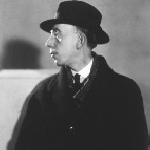
1892 (Nijni Novgorod ) / 1980 (Vanves)
Artist's gallery
Léon Zack was a Russian painter renowned for his contribution to French abstract art. He trained as a painter at private academies and held his first exhibition in Russia at the Salon of the Federation of Moscow Painters. He was particularly interested in the Impressionist works of French artists such as Cézanne and Matisse. Forced to leave Russia due to the political turmoil of the 1920s, he emigrated to Florence, where his artistic practice was enriched by the city’s culture and where he exhibited on several occasions.
Zack settled permanently in Paris in the 1920s and joined the figurative neo-humanist movement, which opposed Cubism; this movement’s advocacy of a return to the line was diametrically opposed to the style and technique he would subsequently adopt. The artist did indeed turn to abstraction under the influence of the post-war American Abstract Expressionist movement, which permeated his artistic practice. Abstraction became the sole means of expression for artists stifled by the constraints of figurative art. Thus, his paintings sought to convey his inner world, emphasising forms and large washes of colour, and revealing the anguish of a tormented painter. His work reached the height of its success in the 1970s, when he was notably the subject of a retrospective at the Musée d’Art Moderne in Paris in 1977. He died in Paris in 1980.
Léon Zack’s work is now held in several public collections, notably at the National Museum of Modern Art – Centre Pompidou, the Museum of Modern Art in Paris and the Museum of Jewish Art and History. It was also the subject of the catalogue raisonné of his paintings published by Pierre Cabanne in 1993, which brings together 1663 described works.
Artist's gallery
Léon Zack was a Russian painter renowned for his contribution to French abstract art. He trained as a painter at private academies and held his first exhibition in Russia at the Salon of the Federation of Moscow Painters. He was particularly interested in the Impressionist works of French artists such as Cézanne and Matisse. Forced to leave Russia due to the political turmoil of the 1920s, he emigrated to Florence, where his artistic practice was enriched by the city’s culture and where he exhibited on several occasions.
Zack settled permanently in Paris in the 1920s and joined the figurative neo-humanist movement, which opposed Cubism; this movement’s advocacy of a return to the line was diametrically opposed to the style and technique he would subsequently adopt. The artist did indeed turn to abstraction under the influence of the post-war American Abstract Expressionist movement, which permeated his artistic practice. Abstraction became the sole means of expression for artists stifled by the constraints of figurative art. Thus, his paintings sought to convey his inner world, emphasising forms and large washes of colour, and revealing the anguish of a tormented painter. His work reached the height of its success in the 1970s, when he was notably the subject of a retrospective at the Musée d’Art Moderne in Paris in 1977. He died in Paris in 1980.
Léon Zack’s work is now held in several public collections, notably at the National Museum of Modern Art – Centre Pompidou, the Museum of Modern Art in Paris and the Museum of Jewish Art and History. It was also the subject of the catalogue raisonné of his paintings published by Pierre Cabanne in 1993, which brings together 1663 described works.